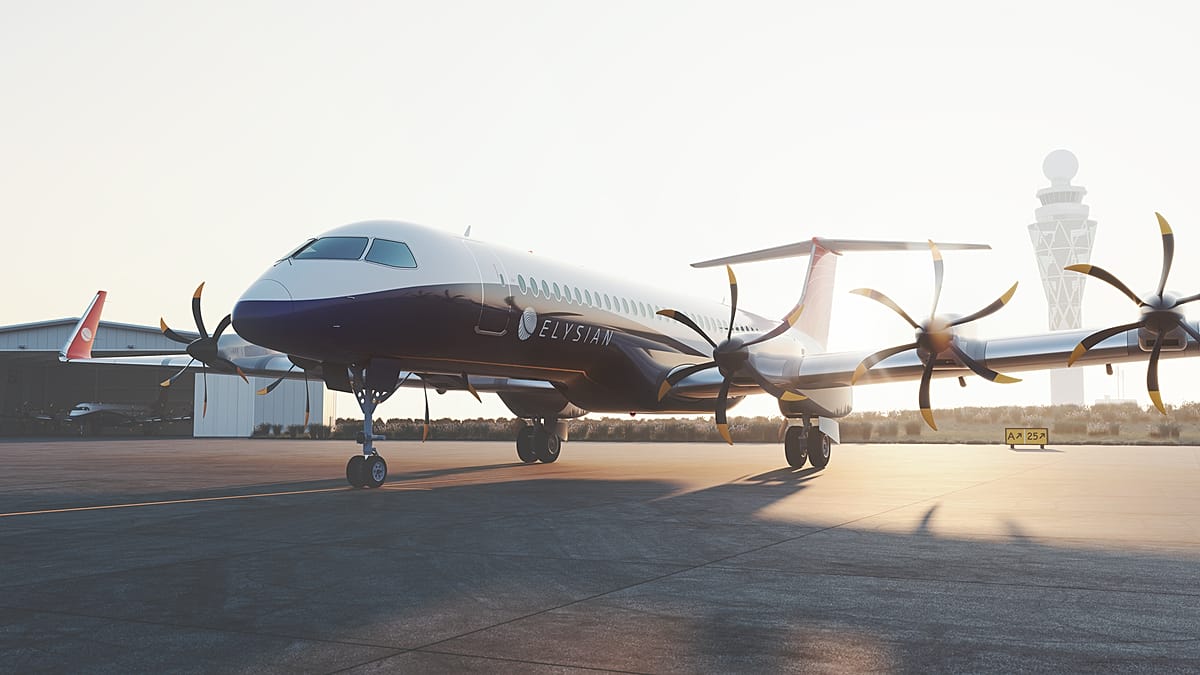
Domestic Air Travel and the Case for its Revival in the United Kingdom

  • Thread starter Thread starter Aviador
  • Start date Start date
  • Tagged users Tagged users None

Aviador

Administrator
Staff member
Subscriber
Joined
Jan 12, 2009
Messages
16,708
Points
373
Location
HEAD OFFICE
United-Kingdom
Domestic Air Travel and the Case for its Revival in the United Kingdom

Over recent decades, the United Kingdom has experienced a marked contraction in its domestic air network. Routes that once provided rapid, reliable links between major regional centres have been withdrawn, often on the assumption that rail modernisation would compensate for the loss of air connectivity. However, a growing body of evidence suggests that the fastest achievable travel times between many UK cities have increased rather than decreased, raising important questions about the efficiency, resilience and economic implications of the current transport landscape.

During the peak of domestic aviation in the late twentieth and early twenty‑first centuries, regional airports such as Leeds Bradford, Southampton, Bristol, Glasgow, Edinburgh and Belfast were integrated into a dense network of short‑haul services. These routes, typically operated by British Midland, KLM UK, Jersey European, Manx Airlines and others, enabled end‑to‑end journey times that were significantly shorter than their rail or road equivalents. Flights between Leeds and Bristol, Southampton, Glasgow or Edinburgh routinely took little more than an hour, providing a level of national connectivity that facilitated business mobility, inter‑regional collaboration and economic integration.

The subsequent decline of domestic aviation has not been matched by equivalent improvements in surface transport. While certain corridors have benefited from targeted investment, many inter‑city rail services remain slower than they were in the 1990s. Cross Country journey times have lengthened, east–west rail links remain constrained, and the national network continues to suffer from congestion, ageing infrastructure and limited capacity. As a result, journeys that were once completed in an hour by air now require three to five hours by rail or road, depending on the route.

This deterioration in travel efficiency has broader economic implications. Reduced connectivity can limit labour mobility, weaken regional competitiveness and constrain the ability of cities outside London to participate fully in national economic activity. In a country where economic disparities between regions are already pronounced, slower inter‑city travel risks reinforcing existing inequalities.

A revival of domestic air travel need not imply a return to the past, nor should it be viewed as incompatible with environmental objectives. Modern turboprop aircraft are significantly quieter and more fuel‑efficient than earlier generations, and the development of sustainable aviation fuels offers a credible pathway to lower‑carbon operations. Moreover, domestic aviation can complement rail rather than compete with it, particularly on routes where rail journey times are structurally uncompetitive due to geography, infrastructure limitations or network congestion.

The UK’s approach contrasts with that of several European nations with comparable geography. Countries such as Norway, Spain and Italy continue to support regional aviation as part of a balanced national transport strategy, recognising that air travel can provide essential connectivity where rail cannot deliver competitive journey times.

In this context, a reassessment of domestic aviation’s role within the UK transport system is warranted. Restoring selected domestic routes - particularly those linking major regional centres with poor rail connectivity - could enhance national cohesion, support regional economies and improve overall transport efficiency. The objective is not to privilege aviation over rail, but to acknowledge that an effective national transport network requires multiple modes working in concert.

Domestic air travel once played a vital role in connecting the United Kingdom. Given the increasing journey times on many inter‑city corridors, it may need to do so again.

#GetUKDomesticFlightsMoving

 
I have to travel domestically within the UK for work reasons ( although this will end, as I retire later this year ) . Destinations I go to are Norwich, Exeter and Southampton. I used to fly from MAN to NWI, for many years , firstly it was Eastern , then Flybe. Its a long journey by road or rail, ive done both, however I can honestly say, when I flew and that was over quite a few years, the flights were never full. Again, Exeter and Southampton, I have done all modes of travel. When these were available from Liverpool, it was ideal, because you get through the airport quickly and your on your way, it makes flying attractive. When the routes only became available from Manchester, I tried it for a bit, but, I spent more time getting to the airport and getting through security, than flight itself. I gave up that option, and have used the train for some year. It isnt brilliant but I can get on at a very local station.

I have just organised a business trip to Exeter and I checked Loganair from Manchester, the timing are no good as there is only 1 flight mid afternoon, I loose a day's business. Domestic flights have to be quick and easy to use,.otherwise they are not attractive.
 
I have to travel domestically within the UK for work reasons ( although this will end, as I retire later this year ) . Destinations I go to are Norwich, Exeter and Southampton. I used to fly from MAN to NWI, for many years , firstly it was Eastern , then Flybe. Its a long journey by road or rail, ive done both, however I can honestly say, when I flew and that was over quite a few years, the flights were never full. Again, Exeter and Southampton, I have done all modes of travel. When these were available from Liverpool, it was ideal, because you get through the airport quickly and your on your way, it makes flying attractive. When the routes only became available from Manchester, I tried it for a bit, but, I spent more time getting to the airport and getting through security, than flight itself. I gave up that option, and have used the train for some year. It isnt brilliant but I can get on at a very local station.

I have just organised a business trip to Exeter and I checked Loganair from Manchester, the timing are no good as there is only 1 flight mid afternoon, I loose a day's business. Domestic flights have to be quick and easy to use,.otherwise they are not attractive.
Your experience is completely valid but domestic flights only work when they’re frequent, well‑timed and easy to use. The problem isn’t flying itself, it’s that the UK has allowed its domestic network to shrink to the point where the remaining services no longer meet the needs of business travellers.

What you describe with Norwich, Exeter and Southampton is exactly the issue. These are long, awkward journeys by rail or road, and historically aviation filled that gap very effectively. When MAN–NWI, LPL–EXT and LPL–SOU were running with sensible timings, they were genuinely competitive.

The fact the flights “were never full” doesn’t mean they weren’t useful it means the UK never developed a coherent regional aviation strategy to support essential connectivity.

The decline in frequencies is the real killer. A single mid‑afternoon flight to Exeter is never going to work for business travel and an expensive stop-over is required making flying even less desirable. But that’s a scheduling problem, not a flying problem. When these routes had morning and evening rotations, they saved hours of travel time and made national‑level work possible from regional cities.
 
Your experience is completely valid but domestic flights only work when they’re frequent, well‑timed and easy to use. The problem isn’t flying itself, it’s that the UK has allowed its domestic network to shrink to the point where the remaining services no longer meet the needs of business travellers.

What you describe with Norwich, Exeter and Southampton is exactly the issue. These are long, awkward journeys by rail or road, and historically aviation filled that gap very effectively. When MAN–NWI, LPL–EXT and LPL–SOU were running with sensible timings, they were genuinely competitive.

The fact the flights “were never full” doesn’t mean they weren’t useful it means the UK never developed a coherent regional aviation strategy to support essential connectivity.

The decline in frequencies is the real killer. A single mid‑afternoon flight to Exeter is never going to work for business travel and an expensive stop-over is required making flying even less desirable. But that’s a scheduling problem, not a flying problem. When these routes had morning and evening rotations, they saved hours of travel time and made national‑level work possible from regional cities.
If I could get a flight, with a twice daily schedule from Liverpool to Southampton and Exeter, id use it without a doubt. The Southampton route was particularly popular in the past with flybe sometimes operated by larger BAe 146s. I can definitely remember sitting on full aircraft The route was certainly around pre Flybe was well. The UK has a pretty abysmal transport strategy, leaving many regional cities poorly connected to one another. This has an adverse affect on many regional cities to grow effectively. Clogged roads and crammed trains are completely unsatisfactory and makes the UK appear pretty backwards. The emphasis has always been linking London with regional cities whilst that is important the London centric attitude neglects other cities and regions.
 
An example of a growing number of domestic routes where air travel should resume ASAP is between LBA and BRS.

The situation with cross country domestic travel between Yorkshire and the South West seems to get overlooked and the current rail alternative is increasingly fit for purpose in name only.

A example of this was when my wife had to travel down to Bristol for business recently, and the journey highlighted just how broken the rail connection has become. To guarantee she could do a full day's work, she had to travel down the night before, adding to the cost and hassle of an extra overnight stay.

The return journey was where it really fell apart. After a series of rolling delays, her train was abruptly terminated at Birmingham New Street. With no onward rail options provided, she ended up having to share a long distance taxi back to Leeds with two complete strangers, finally getting through the door well after midnight.

Unfortunately, this isn't an isolated incident. All too often, CrossCountry services along that spine are plagued by severe delays, sudden cancellations, short formations, and astronomical ticket prices. When a simple 200 mile journey requires an overnight hotel stay on the way down and a midnight taxi ride on the way back, it completely destroys the argument that the train is a reliable alternative for regional business travel.

A dedicated LBA–BRS regional flight (even a 2x daily weekday service operated by an ATR 72 or E-Jet) would completely transform connectivity between the two regions. It would allow business travellers to do a genuine day trip, leaving in the morning and returning that evening, without having to gamble on the rail network.

Given the massive economic links between Yorkshire and the Bristol/Bath tech and engineering hubs, surely the demand for a reliable regional air link is sitting there waiting to be tapped?
 
An example of a growing number of domestic routes where air travel should resume ASAP is between LBA and BRS.

The situation with cross country domestic travel between Yorkshire and the South West seems to get overlooked and the current rail alternative is increasingly fit for purpose in name only.

A example of this was when my wife had to travel down to Bristol for business recently, and the journey highlighted just how broken the rail connection has become. To guarantee she could do a full day's work, she had to travel down the night before, adding to the cost and hassle of an extra overnight stay.

The return journey was where it really fell apart. After a series of rolling delays, her train was abruptly terminated at Birmingham New Street. With no onward rail options provided, she ended up having to share a long distance taxi back to Leeds with two complete strangers, finally getting through the door well after midnight.

Unfortunately, this isn't an isolated incident. All too often, CrossCountry services along that spine are plagued by severe delays, sudden cancellations, short formations, and astronomical ticket prices. When a simple 200 mile journey requires an overnight hotel stay on the way down and a midnight taxi ride on the way back, it completely destroys the argument that the train is a reliable alternative for regional business travel.

A dedicated LBA–BRS regional flight (even a 2x daily weekday service operated by an ATR 72 or E-Jet) would completely transform connectivity between the two regions. It would allow business travellers to do a genuine day trip, leaving in the morning and returning that evening, without having to gamble on the rail network.

Given the massive economic links between Yorkshire and the Bristol/Bath tech and engineering hubs, surely the demand for a reliable regional air link is sitting there waiting to be tapped?
Ive enough experience myself using Cross Country, its very hit or miss. I dont like using them, but there is little alternative anymore. I have even travelled via London to get to Exeter by rail, GWR is better, but of course station transfer in London
 
The problem is that airlines struggle to make money on such routes. Easyjet/RYR work on longer distances where there is high demand. But the era of two thirds empty flights within the UK, when their aircraft can be operated more profitably elsewhere, have gone for good. And airlines really couldn't care a fig if the absence of these routes is inconvenient for passengers.
 
With the quantity of Ryanair LBA-DUB flights having less than ideal loads, I beg to differ. I’d say it rather depends whether an airline wants to capture the market at the expense of another. I’m sure RYR could make more money on a flight from LBA to, say, Cologne or Copenhagen, or even Cork, but they choose to do Dublin 3X daily, presumably because they have interest in maintaining that market
 
When there were an array of domestic links from Manchester I did try that for a time to Exeter, Southampton and Norwich. But with traffic along the M56 of a morning, plus allowing plenty of time for security queues, i gave up on that option. . There was a time Flybe operated to EXT and SOU from Liverpool, that was better because you didnt need so much time to pass through the terminal .
 
on the day that several domestic air link have been announced to be severed ...we get this : -

 
After the loss of Loganair routes MAN- SOU/EXT , and their Dundee network going, does it seem that regional air links for the most part are over ? Its not that its been replaces by an amazing good interconnecting rail network, it just seems these routes no longer work. I presume the demand has dropped plus Loganair's fares tend to be high . Apart from from trunk routes like LHR-EDI , I don't see UK domestic air services returning, particularly as there is really no one to fly them.
 
This could help with domestic and short hops.

Yeah. Certainly in the UK, we have quite a few hops between Islands in Scotland - some are very short, but worthwhile because the flights are much quicker than sailing and driving on often narrow and bendy roads.

Similarly, maybe it would be viable to do a short hop across the Bristol Channel from my local (Cardiff) to Bristol? I hardly dare suggest it because it's difficult to say which airport would benefit more ...

As for sourcing the electricity - most airports have large areas of grassland - could solar panels be installed on these? I appreciate these areas need to be kept largely clear to aid visibility, but if panels were at ground level, surely it wouldn't affect visibility for pilots who are several metres above ground level when taxiing?

In the end it comes down to cost, of course (as with everything aviation related). I did read somewhere that the cost of fuel is the biggest contributor to the cost of an airline ticket. If through a combination of solar panels and electric aircraft the fuel cost could be reduced to a level where it is negligible, what is the next biggest contributor? Flight crew costs? I would be interested to know what is the minimum crew for a commercial flight? Pilot, co-pilot and cabin steward? Or does there have to be a separate navigator as well?
 
Some airports already have solar farms, my local airport " Liverpool " does, but im sure there are others. From what I recall of the article I think they were suggesting ranges of like London-Dublin/ Paris. This would open up quite a bit of opportunities if it can keep routes economic which otherwise wouldn't be.
 

Remove Advertisements

Subscribe to help support your favourite forum and in return we'll remove all our advertisements. Your contribution will help to pay for things like site maintenance, domain name renewals and annual server charges.


Forums4aiports
Subscribe

Heads Up!

For some weird reason, my days off work tend to involve being out of my flat by 5am and not getting back until 10pm. Back to work and the regular "fix" of 7.40am to 7.15pm hours
Heatwave Mk2 next week?
Some explosive weather build-ups currently in the North of England. What is it like where you are?
LBA: B737-300 G-GDFK empty down to Paris at 16:15 to operate the return LS268 back to Leeds 20:00 ETA where it will then operate the delayed LS265 to Malaga 20:40ETD
LBA: Albastar B737-800 EC-MUB positioning in tommorow afternoon from Gatwick 15:45 to operate a charter to Lourdes/Tarbes on Friday afternoon 14:00 AP7721 STC
I don't believe I am quite covering enough roles at work. Its now 4 on a bad day, 5 on a good day and there is scope for a 6th and 7th role. Still on minimum pay but had the biggest payrise in the company,

Trending Hashtags

Advertisement

Back
Top Bottom
  AdBlock Detected
Sure, ad-blocking software does a great job at blocking ads, but it also blocks some useful and important features of our website. For the best possible site experience please take a moment to disable your AdBlocker.