
I think you’ll find I’m not the one fixated with the North/South divide. Others are more so given they seem to think the North is reliant on South Wales business links, when it isn’t.
If the south wanted the North to prosper, then its rather funny that it’s the Sennedd on the verge of cancelling a major road project that would link North Wales better with Liverpool and Manchester, and thus would do 1000x more for business links than any North/South connection does.

but, the Sennedd can’t do any wrong can it? as long as we get our ‘faux independence’ based on ‘civic pride and showing those Westminster monsters’ than and real world business and development data, then nothing else matters really.
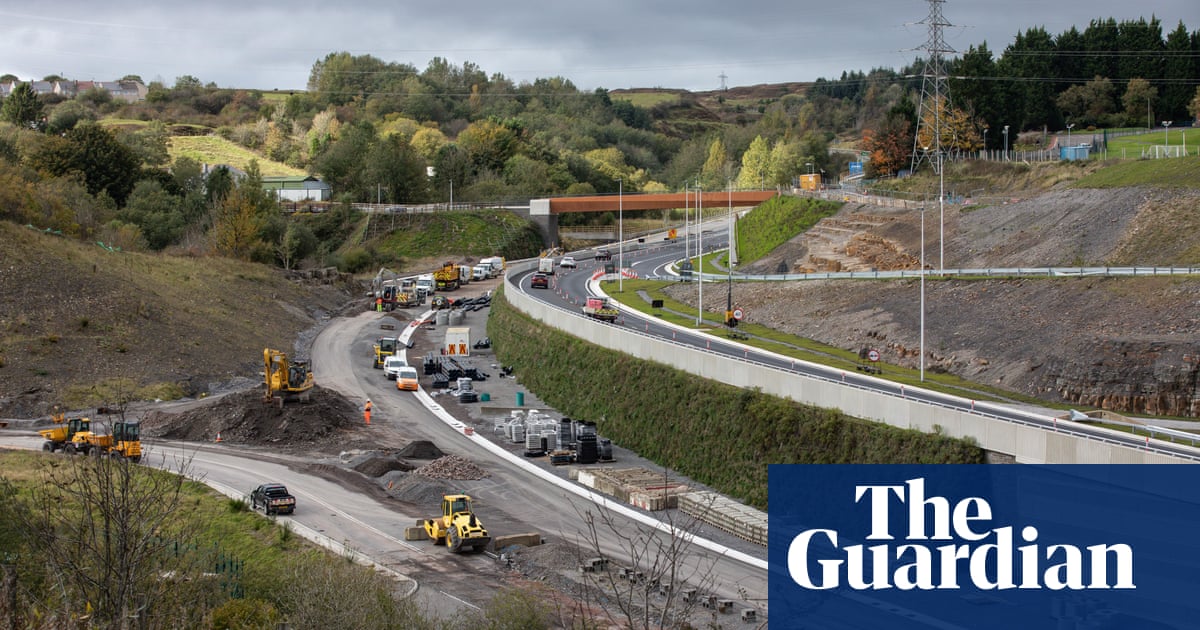
They've suspended ALL road building across the country not just in the north as part of tackling climate change and an external panel will review all projects.
 
LanzaTech confirms plans for first UK commercial-scale alcohol-to-jet fuel facility in South Wales


Interesting article, could prove to be good for employment in South Wales, I wonder they intend to locate the plant.
Swansea, Llanelli or Port Talbot by the looks of it.
 
Also being introduced on the as yet uncompleted section of the A465 Heads of the Valleys road, when it opens in November, nearly 4 years late.
 
They are being introduced. In my part of Cardiff the council has introduced a 20mph zone near the shopping complex where there are a lot of pedestrians.
Thanks. Doesn't sound anything like as comprehensive as certain places in my area - yet!
 
Our glorious leader has said he wants 20mph to be the default speed limit in all built up areas of Wales.
He would find soul mates in the previous and current elected city mayors of Bristol. The entire city is awash with 20 mph speed limits from suburbs to central, with some major thoroughfares also included. Not that many drivers abide by them.
 
He would find soul mates in the previous and current elected city mayors of Bristol. The entire city is awash with 20 mph speed limits from suburbs to central, with some major thoroughfares also included. Not that many drivers abide by them.
I think for many residential areas and outside schools it's a good idea. Some people drive like nutters through the streets of my estate and if a lower speed could help slow them down that would be a good thing but i don't necessarily agree with a 50mph limit on some stretches of motorway and the proposed A465 zone.
 
Welsh government has released it's 20 point plan for reforming the UK.
"

8. Annex: the 20 propositions​

General principles​

  1. Whatever its historical origins, the United Kingdom is best seen now as a voluntary association of nations taking the form of a multi-national state, whose members share and redistribute resources and risks amongst themselves to advance their common interests. Wales is committed to this association, which must be based on the recognition of popular sovereignty in each part of the UK; Parliamentary sovereignty as traditionally understood no longer provides a sound foundation for this evolving constitution.
  2. The principles underpinning devolution should be recognised as fundamental to the UK constitution. The devolved institutions must be regarded as permanent features of the UK’s constitutional arrangements; any proposals for the abolition of such institutions should be subject to their consent and to the consent of the relevant electorate.
  3. The powers of the devolved institutions should be founded on a coherent set of responsibilities allocated in accordance with the subsidiarity principle. Those powers be defined by the listing of the specific matters which it is agreed should be reserved to Westminster in respect of each territory, all other matters (in the case of Wales) being or becoming the responsibility of Senedd Cymru and/or the Welsh Government.

Legislatures and legislative powers​

  1. It should be a matter for each legislature to determine its own size, electoral arrangements and internal organisation, with locally-determined Standing Order provision for the relevant legislature in respect of these matters as required.
  2. The relations of the 4 legislatures of the United Kingdom should proceed on the basis of mutual respect. Although, as matters currently stand, the UK Parliament still formally possesses legal authority to legislate for Wales, Scotland and Northern Ireland on all matters (including those devolved), it should not normally seek to legislate for a territory, in relation to matters within the competence of the devolved legislature of that territory, without that legislature’s explicit consent. The ‘not normally’ requirement should be entrenched and codified by proper definition and criteria governing its application, giving it real rather than symbolic acknowledgement in our constitutional arrangements.
    Alternatively, a new constitutional settlement could simply provide that the UK Parliament will not legislate on matters within devolved competence, or seek to modify legislative competence or the functions of the devolved governments, without the consent of the relevant devolved legislature.
  3. It should be recognised that the legislative powers of the UK state are now exercisable by 4 legislatures rather than one, and so the running costs of the 4 legislatures should in future be covered together on the same basis as those of the UK Parliament currently, ie through a specified funding line (but one covering all 4 legislatures), ‘top-sliced’ from the total of budget provision for the UK.
  4. Each of Wales, Scotland and Northern Ireland should continue to be represented in the House of Commons. A reformed Upper House of Parliament should be constituted, with a membership which takes proper account of the multi-national character of the Union, rather than (as the House of Commons is) being based very largely on population. That Upper House should have explicit responsibility for ensuring that the constitutional position of the devolved institutions is properly taken into account in UK parliamentary legislation.

Executive powers: governments, agencies and civil service​

  1. The United Kingdom is governed by 4 administrations, each of which (including the UK government in respect of England) has separate responsibilities, which should be recognised by all of the other partners as part of the shared enterprise of the governance of the UK. The relations of the 4 governments should therefore proceed on the basis of a partnership of equals, in a spirit of mutual respect (and comment on the policies of other administrations should, within a culture of robust political debate, properly reflect that respect).
  2. Save where other arrangements have been agreed (and provided for as necessary in legislation), ministers in each administration should have exclusive authority, and be fully accountable locally, for the exercise of statutory functions in their territories in accordance with their legal powers, without challenge, review or oversight by ministers of another administration.
  3. There should be well-founded arrangements and/or machinery to enable the various administrations to work effectively together on matters of mutual interest. These may be of a bilateral or multilateral nature as appropriate. Where all 4 administrations (or however many have the relevant powers) agree that there is a need for a common approach, common frameworks, shared delivery mechanisms and joint governance arrangements should be developed on a collaborative and consensual basis. Any such machinery must make provision for the speedy and efficient resolution of disagreements between one government and another, or between several governments, with a clear and agreed role for independent input (whether advice, mediation or arbitration).
  4. In relation to the UK’s international relations and trade, ministers and officials of the devolved administrations should be involved through formal inter-governmental machinery in discussion with the UK government about the formulation of the UK's policy position on matters which may be the subject of international negotiations, particularly where these could have important implications for matters within devolved competence. The UK government should not normally proceed with negotiating mandates on devolved matters which have not been agreed with the relevant devolved institutions, and the devolved governments should be closely involved with the process of negotiation. It should be for the devolved administrations, in consultation with the UK government (and other administrations as necessary) and subsequently with their devolved legislatures, to consider how obligations within devolved competence arising from the UK’s international agreements should be implemented, including whether the devolved institutions should implement these through their own legislation or agree to be covered in UK/GB legislation.
  5. Whenever creation, or repurposing, of a public body or agency with executive responsibilities for more than one part of the UK is in prospect, consideration must always be given in its institutional design to the views of the relevant devolved administrations, to enable appropriate account to be taken of the interests of each of the parts of the UK within the agency’s remit. This should include arrangements relating both to a body’s governance and funding, and to scrutiny and oversight of its activities.
  6. Ministers in each administration should continue to be supported by civil servants, whether or not organised on a territorial basis, subject to rules and codes as to appointment and professional conduct; and arrangements should be in place to facilitate exchanges and transfers of staff from one administration to another.

Finance​

  1. It is for the UK government to determine levels of public expenditure, both for programmes operating at UK/GB/England and Wales level and for England in respect of policy areas which are devolved. Spending power for the devolved administrations should be determined, having regard to proposed levels of spending for England, by reference to a set of agreed objective indicators of relative need, so that spending power is fair across the different administrations and an equivalent level and quality of public goods can be delivered in all parts of the UK. The UK government should not be able arbitrarily to allocate additional funding to any particular part of the UK outside these arrangements.
  2. The devolved administrations should be resourced by a combination of needs-based grant from the UK government, resources raised through devolved and local taxation, and capital borrowing.
  3. The operation of these resourcing arrangements, including determinations of devolved administrations’ spending power and borrowing limits, should be the responsibility of a public agency accountable to all 4 administrations jointly.
  4. It is for the devolved administrations to determine, within the powers and resources available to them, their own priorities for taxation and public expenditure relating to their devolved responsibilities, and to account for their decisions to their own legislatures. However, decisions taken by the devolved administrations or bodies under their jurisdiction can have financial implications for departments or agencies of the UK government (‘spill-over’ effects). Alternatively, decisions of UK departments or agencies can lead to financial implications for the devolved administrations. In these cases, the Government responsible for the decisions leading to financial implications for others must take responsibility for dealing with those implications. Disagreements on the operation of this principle should be subject to independent assessment.

Justice and the courts​

  1. The devolved institutions (and the UK government and Parliament in respect of England) should be responsible for policing and the administration of justice in their territories. Jurisdictional arrangements and court structures should reflect the devolved institutions’ distinctive responsibilities for their territories in respect of these and related matters.
  2. The Supreme Court, as the ultimate court of appeal for most matters within the United Kingdom, should have in membership individuals identified with each and every part of the UK. The opportunity should be taken, when vacancies come to be filled, to ensure that at least one suitably-qualified person identified with Wales is a member of the Supreme Court.

Constitutional reform​

  1. Future constitutional developments in the United Kingdom should be considered on a holistic basis and on the basis of constitutional principle, rather than by way of ad hoc reforms to particular constitutional settlements. This should be undertaken by a constitutional convention. The Welsh Government and the other devolved administrations must have seats at the convention table, and have the opportunity to press their particular constitutional aspirations, informed by proposed developments elsewhere in the UK. Citizens across the UK should be able to participate in any convention. The case for a written constitution should form part of the convention’s deliberations."
  2. https://gov.wales/reforming-our-union-shared-governance-in-the-uk-2nd-edition-html
 
Re post #1,318, I find some of the proposals muddled and at cross purposes. For example:

The United Kingdom is governed by 4 administrations, each of which (including the UK government in respect of England) has separate responsibilities, which should be recognised by all of the other partners as part of the shared enterprise of the governance of the UK. The relations of the 4 governments should therefore proceed on the basis of a partnership of equals, in a spirit of mutual respect (and comment on the policies of other administrations should, within a culture of robust political debate, properly reflect that respect).

The problem with all this is England. The section I have highlighted in italics ignores the ramifications of Westminster (with representatives from Wales, Scotland and Northern Ireland both in Parliament and in Government) acting with two hats: one as the UK Government with, if the WG’s proposals are accepted, designated powers in respect of the UK generally - as now but reduced - along with all the other powers in respect of England that have been transferred to the devolved governments.

Apart from the blatant imbalance where elected representatives from the other home nations would still have a say on purely English matters with no reciprocal voice for English representatives in the devolved governments, it only perpetuates the unsatisfactory situation that is currently the case.

Not only that but it confuses. One small example, given here because it is aviation-related, is the UK Government’s financial grant to English airports earlier this year. That gave rise to claims of unfairness from some quarters who seemed not to understand that the UK Government was then acting as England’s government and not as the UK government.

There are so many things in the WG’s proposals that don’t stand up to serious scrutiny but it would be tedious to go into great detail here. It seems to me to be an idealistic dream of a devolved government wanting to remain within a loose confederation of nations without going the extra mile to full independence.

I see three options:

Four devolved governments which would mean one for England, or independence for those home nations that wish to leave the UK, or a continuation of the ersatz 'federal' system we have at the moment.

If there were four devolved governments that would at least remove the dual role of Westminster and should put the four home nations on an equal footing in terms of devolved responsibilities and powers, something that doesn’t happen at the moment within the current three devolved administrations where for example Scotland enjoys greater powers than Wales.
 
There are so many things in the WG’s proposals that don’t stand up to serious scrutiny but it would be tedious to go into great detail here. It seems to me to be an idealistic dream of a devolved government wanting to remain within a loose confederation of nations without going the extra mile to full independence.
And you may have hit the nail on the head there. The WG want to essentially run Wales as if it's an independent country without being an independent country and all the responsibility that governments have and the accountability many of them have. In the end the buck would stop with them and they wouldn't be able to blame Westminster which is often the excuse that is used when it comes to Wales problems, welfare being an example. The points they presented would need the cooperation of a Westminster government that has the same vision, i do wonder how it matches up to UK Labour's vision? This Westminster government is more interested in centralising powers rather than giving them away. Getting Policing and Justice devolved seems extremely unlikely in the immediate future.
 

Upload Media

Remove Advertisements

Subscribe to help support your favourite forum and in return we'll remove all our advertisements. Your contribution will help to pay for things like site maintenance, domain name renewals and annual server charges.



Forums4aiports
Subscribe

NEW - Profile Posts

All checked in for my flight to Sydney from Manchester via Heathrow. Been waiting for this trip for nearly a year and now tomorrow I'll finally head to Australia and New Zealand!
If anyone would like to share their local airport news right here in our news area let me know so I can give you the correct permissions to do so. It only takes a couple of minutes to upload a news story with an accompanying image. The news items can then be shared on the site homepage by you. #TakePart #Forums4airports Bring the news to one place!
survived a redundancy scenario where I work for the 3rd time. Now it looks likely I will get to cover work for 2 other teams.. Pretty please for a payrise? That would be a no and so stay on the min wage.
Live in Market Bosworth and take each day as it comes......
Well it looks like I'm off to Australia and New Zealand next year! Booked with BA from Manchester via Heathrow with a stop in Singapore and returning with Air New Zealand and BA via LAX to Heathrow. Will circumnavigate the globe and be my first trans-Pacific flight. First long haul flight with BA as well and of course Air NZ.
15 years at the same company was reached the weekend before last. Not sure how they will mark the occasion apart from the compulsory payirse to minimum wage (1st rise for 2 years; i was 15% above it back then!)

Trending Hashtags

Advertisement

Back
Top Bottom
  AdBlock Detected
Sure, ad-blocking software does a great job at blocking ads, but it also blocks some useful and important features of our website. For the best possible site experience please take a moment to disable your AdBlocker.