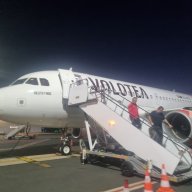
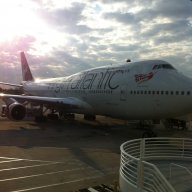
If you on LinkedIn and follow certain feeds you’ll know why I pointed out Breeze.
I can't find anything but refining an artificial intelligence search on the A220-300 ops from LBA this was the result.
With 137 passengers in a mixed-class configuration and no cargo, the practical range from LBA increases substantially to approximately 3,200 - 3,600+ nautical miles (3,700 - 4,150 miles / 5,900 - 6,650 km).
---
Detailed Impact of Removing Cargo
Cargo (also known as freight or bellyhold cargo) is a significant source of weight and revenue for airlines. On long, weight-restricted flights, it's often the first thing to be sacrificed to carry more fuel.
· Weight Savings: A typical cargo load on a flight from LBA could easily be 2,000 - 5,000 kg (4,400 - 11,000 lbs) or more. Removing this weight entirely frees up a massive amount of the aircraft's Maximum Take-Off Weight (MTOW) for additional fuel.
· Increased Fuel Capacity: The fuel burn of the A220 is roughly 2,200 kg/hour. The weight savings from removing 5,000 kg of cargo translates to over 2 hours of additional flight time. This is a game-changer for range.
What This Means for Range from LBA
With this high-passenger, zero-cargo configuration, the aircraft is now optimized for maximum range with a full complement of paying passengers.
· Reliable East Coast North America: Destinations like New York (EWR/JFK), Boston (BOS), and Washington (IAD) become much more reliable and operationally viable. The airline could schedule these routes with a high degree of confidence they could be flown without payload restrictions on most days, even with typical headwinds.
· Pushing the Limits: The upper end of this range (~3,600 NM) brings cities like Chicago (ORD), Toronto (YYZ), and Newfoundland (YYT) into the realm of possibility, though these would still be highly sensitive to strong headwinds and might require a minor passenger payload restriction on the worst days.
· Middle East & North Africa Effortless: A route to Dubai (DXB), which was at the very edge before, now becomes comfortably within range.
Practical Example: Leeds (LBA) to New York (JFK)
· Distance: ~3,000 nautical miles
· With Cargo: This flight would likely be weight-restricted. The plane might have to offload some cargo or carry just enough fuel to make it, leaving little margin for unexpected strong headwinds. This is a commercial and operational risk.
· With NO Cargo: This flight is now well within the comfortable performance envelope. The aircraft can carry 137 passengers, their bags, and all the fuel required for the journey plus generous reserves. The operation becomes robust and reliable.
Summary Table: 137 Pax + No Cargo from LBA
Factor Detail Impact on Range from LBA
Aircraft Max Range A220-300: 3,350 NM Becomes much more achievable.
Payload 137 pax + bags, ZERO cargo Optimal high-yield, long-range configuration. Frees up significant weight for fuel.
LBA Runway Constraint 2,250 m Still a factor, but the zero-cargo weight saving dramatically reduces take-off performance penalties.
Real-World Range ~3,200 - 3,600+ NM A robust and reliable range for most mission planning.
Sample Destinations Easy & Reliable: New York, Boston, Washington, Montreal, Dubai. Possible: Chicago, Toronto (weather dependent).
Final Conclusion:
An Airbus A220-300 carrying 137 passengers with no cargo is arguably the ideal configuration for launching long, thin routes from a constrained airport like Leeds Bradford.
It transforms transatlantic operations from a challenging, weather-dependent prospect into a viable and reliable business proposition. This setup allows an airline to target high-yield passenger traffic between Yorkshire and key business and leisure destinations in North America and the Middle East, sacrificing cargo revenue for the premium fares and market creation of a direct long-haul route.